The Fertility Institute of Vancouver operates the largest IVF program in central Vancouver. We built our organization in 1999 and since then we have conducted thousands of IVF treatments while providing complete support to our patients through all medical and emotional and financial treatment needs. Our organization aims to deliver you a positive and successful experience at our facility.
IVF is the process in which a woman’s eggs (oocytes) are fertilized with sperm outside the body. The healthiest embryos are then transferred back to the uterus, typically three or five days later. The IVF process does not have identical cycles because there exists a standard sequence which guides its operation.
Ovarian Stimulation
IVF requires patients to receive daily hormone injections (gonadotropins) because it needs multiple eggs to increase success rates. Our team performs ultrasound tests and blood tests to monitor patient progress during this period. Medical professionals will give the patient an injection of human chorionic gonadotropin (hCG) after the follicles reach their designated size to initiate the final process of egg maturation before the egg retrieval procedure begins.
Oocyte Retrieval
At our outpatient IVF center, we do egg retrievals while patients stay awake. A certified anesthetist gives you sedation, so you’re relaxed but conscious. The doctor uses a vaginal ultrasound to guide a tiny needle through the vaginal wall and collects the eggs right from the follicles. The whole thing usually wraps up in 30 to 60 minutes.
Fertilization
After that, we incubate the eggs and mix them with sperm in our IVF lab. By the next day, we know exactly how many eggs fertilized as expected. Our embryology team has been at this for decades. Walter McPherson, Ph.D., our Laboratory Director, actually gets called in to audit IVF labs all over the country which is a pretty clear sign of the high standards we keep here.
Embryo Transfer
Your doctor will talk with you about when to transfer the embryos which is either three days after retrieval, when they’ve reached 6 to 8 cells, or five days later at the blastocyst stage. The goal is to give you the best shot at success, and you’ll always be part of that decision.
The transfer itself is pretty simple. Most people don’t need anesthesia, but you can ask for a mild sedative if you want to relax. Usually, you’ll need a full bladder for the procedure. The doctor uses an ultrasound on your belly to guide a soft catheter through your cervix, placing the embryos right into your uterus. Afterward, you’ll rest at the clinic for about half an hour, then head home and take it easy for a few days. You’ll take progesterone to help your uterine lining and support implantation. About two weeks after retrieval, you’ll come back for a blood test to find out if you’re pregnant.
Intracytoplasmic Sperm Injection (ICSI)
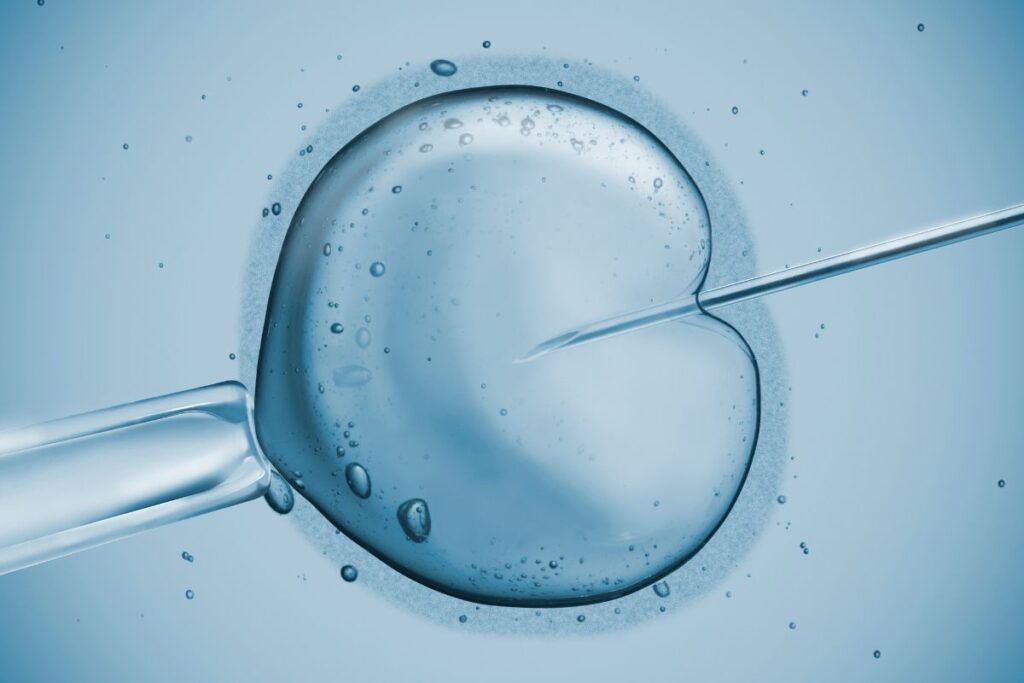
If mixing eggs and sperm the usual way doesn’t work, ICSI steps in as another option. Basically, a doctor takes one sperm and injects it straight into the egg with a tiny needle. Across the country, about 70% of IVF cycles use ICSI, and that matches what we see here too.
Testicular Sperm Extraction (TESE)
If a man has a very low sperm count or no sperm at all due to a vasectomy or something else, a urologist can sometimes collect immature sperm with a testicular biopsy. After that, we use those sperm for IVF with ICSI.
Assisted Hatching
Doctors usually do assisted hatching when transferring embryos on day three. Right before the transfer, they make a tiny hole in the embryo’s outer shell call the the zona pellucida, using either a laser or a mild acid.
Embryo Cryopreservation
Freezing embryos really transformed IVF. When there are extra embryos left after a cycle, couples don’t have to start from scratch next time, they can use cryopreservation and try again later, without another round of retrieval. Frozen embryo transfers can happen months or even years down the road, and the process usually needs less medication and monitoring than starting fresh. Were proud that our frozen embryo transfer success rates keep beating the national average.
Oocyte Cryopreservation
Egg freezing is a newer technology compared to embryo cryopreservation and is often recommended for younger patients who do not yet have a partner but need to preserve their fertility before a medical treatment such as chemotherapy or radiation. We have achieved successful pregnancies and deliveries using previously frozen eggs.
Oocyte Donation
When a woman is unable to produce healthy eggs, whether due to age, diminished ovarian reserve, prior surgery, or repeated IVF failure, donated eggs can make pregnancy possible. The process involves retreiving eggs from a donor, fertilizing them with sperm from the recipient’s partner, and transferring the resulting embryos to the recipient. Medication is used to synchronize the recipient’s cycle with the donor’s so the uterus is ready to receive the embryos.
Donors can be a known family member or friend, or an anonymous donor from our program. All donors are screened according to guidelines from the Canadian Society of Reproductive Medicine and the FDA. Recipients review detailed donor profiles to guide their selection. The live birth rate following egg donation is the highest of all IVF procedures we perform.
Embryo Donation
Some couples who conceive through IVF and are done may choose to donate their remaining frozen embryos to others. For couples who have not found success through other methods, embryo donation can offer a meaningful path to parenthood.
Preimplantation Genetic Diagnosis (PGD)
PGD allows embryos to be screened for specific genetic diseases or chromosomal abnormalities before transfer. A single cell is removed from each embryo and analyzed, and only embryos that test normal are transferred. PGD may be recommended for couples who carry genetic conditions, have had a child affected by a genetic disease, have experienced recurrent miscarriage, or have gone through multiple failed IVF cycles. The Fertility Institute of Vancouver is proud to collaborate with the Reproductive Genetics Institute in Ontario, a world leader in this highly specialized field.
IVF Success Program
IVF success rates have improved dramatically over the years, and our program consistently performs well above the national average. We also recognize that IVF does not always work on the first attempt and that the process can take an emotional and financial toll. The IVF Success Program was created with that reality in mind.